
When people hear the word “phishing,” many assume it is a problem reserved for large corporations, government agencies, or major financial institutions.
The reality is much different.
Phishing attacks target everyone.
Individuals.
Families.
Churches.
Small businesses.
Nonprofits.
Creators.
Ministries.
If you have an email address, you are a potential target.
The reason phishing remains one of the most successful cyberattacks is simple:
It doesn’t attack computers first.
It attacks people.
Most phishing emails are designed to create urgency, fear, curiosity, or excitement.
They often appear to come from trusted organizations such as:
- Microsoft
- Amazon
- PayPal
- Banks
- Shipping companies
- Social media platforms
In many cases, the email looks completely legitimate.
Logos are copied.
Branding is replicated.
Language appears professional.
The goal is to convince you to click before you think.
Some common phishing messages include:
- “Your account has been suspended.”
- “A login attempt was detected.”
- “Your package could not be delivered.”
- “Update your payment information.”
- “Your password will expire today.”
- “Review this important document.”
One click can sometimes lead to:
- stolen passwords
- malware infections
- financial fraud
- compromised accounts
- identity theft
Churches are increasingly being targeted as well.
Attackers often impersonate:
- pastors
- ministry leaders
- church administrators
They may request:
- gift cards
- donations
- wire transfers
- account updates
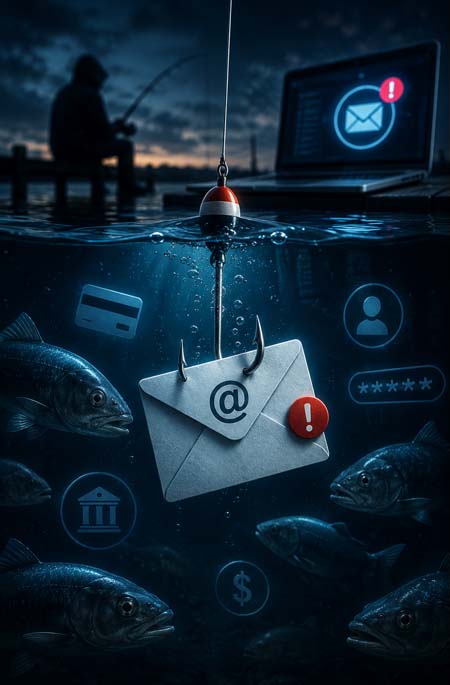
Many people comply because they trust the sender.
The problem is that the sender isn’t real.
The good news is that most phishing attacks can be avoided by following a few simple habits.
Slow Down
Most phishing attacks rely on urgency.
Take a moment to examine the message before acting.
Verify Requests
If someone requests money, gift cards, or sensitive information, verify the request through another communication method.
Check Links Carefully
Hover over links before clicking.
The displayed destination often reveals the scam.
Enable Multi-Factor Authentication
Even if a password is stolen, MFA can help stop attackers from gaining access.
Trust Your Instincts
If something feels unusual, it probably deserves a second look.
Technology continues to evolve, but the basic tactics used by cybercriminals remain surprisingly consistent.
They exploit trust.
They exploit fear.
They exploit distraction.
The best defense is awareness.
Cybersecurity is not about being paranoid.
It is about being prepared.
The next suspicious email you receive could be harmless.
Or it could be the one that saves you from becoming a victim because you took a moment to stop, think, and verify.
Stay alert.
Stay informed.
Stay secure.
— TechWatchman